How AI Could Transform Civilization
What did artificial intelligence answer to this question?
Introduction: The Dual Edge of AI's Power
Artificial intelligence (AI) represents perhaps the most potent technology humanity has ever created—a force capable of reshaping not only industries and economies but the very foundations of civilization.
But AI, with its transformative potential, embodies a dual-edge: unparalleled innovations on one side and unprecedented threats on the other. Unlike any technology before, AI pushes us to rethink basic tenets of human society, challenging the status quo while offering powerful avenues for progress.
Here, we’ll explore the far-reaching implications of AI as both a revolutionary tool and a potential existential threat—painting a detailed picture of what this could mean for human civilization as a whole.
Unveiling the Uncharted Horizons of Threats and Opportunities
1. AI as a Catalyst for Revolutionary Innovation
AI's capability to analyze and predict at scales far beyond human capacity means it can unlock new forms of innovation that traditional sciences and technologies could never achieve independently. This potential innovation landscape is broad, yet we can categorize it into several core areas:
1.1 Superhuman Knowledge and Accelerated Scientific Discovery
With AI-powered models like GPT-4, we’re already seeing how machines can be “trained” to understand and generate human language, code, even compose music or create art. But as we approach more advanced models, there is the potential to harness superhuman knowledge that can comb through complex datasets to uncover connections previously invisible to human researchers.
Example: Drug discovery is a promising domain where AI is dramatically accelerating research timelines. Machine learning can sift through trillions of molecular structures in a fraction of the time it would take human scientists, leading to treatments or cures for diseases like cancer or Alzheimer’s within years rather than decades.
1.2 Reshaping Human Creativity and Culture
Creativity, once thought to be uniquely human, is another domain in which AI is starting to break ground. Advanced AI models, which can create unique artwork, compose original music, or even script compelling narratives, are reshaping how we think about creativity itself.
Implication: By augmenting human creativity, AI could help develop new cultural forms that were never possible before. Collaborative human-AI creations may become a new standard in art, literature, and entertainment, leading to an evolution in cultural identity and expression.
1.3 The Dawn of Fully Autonomous Societies
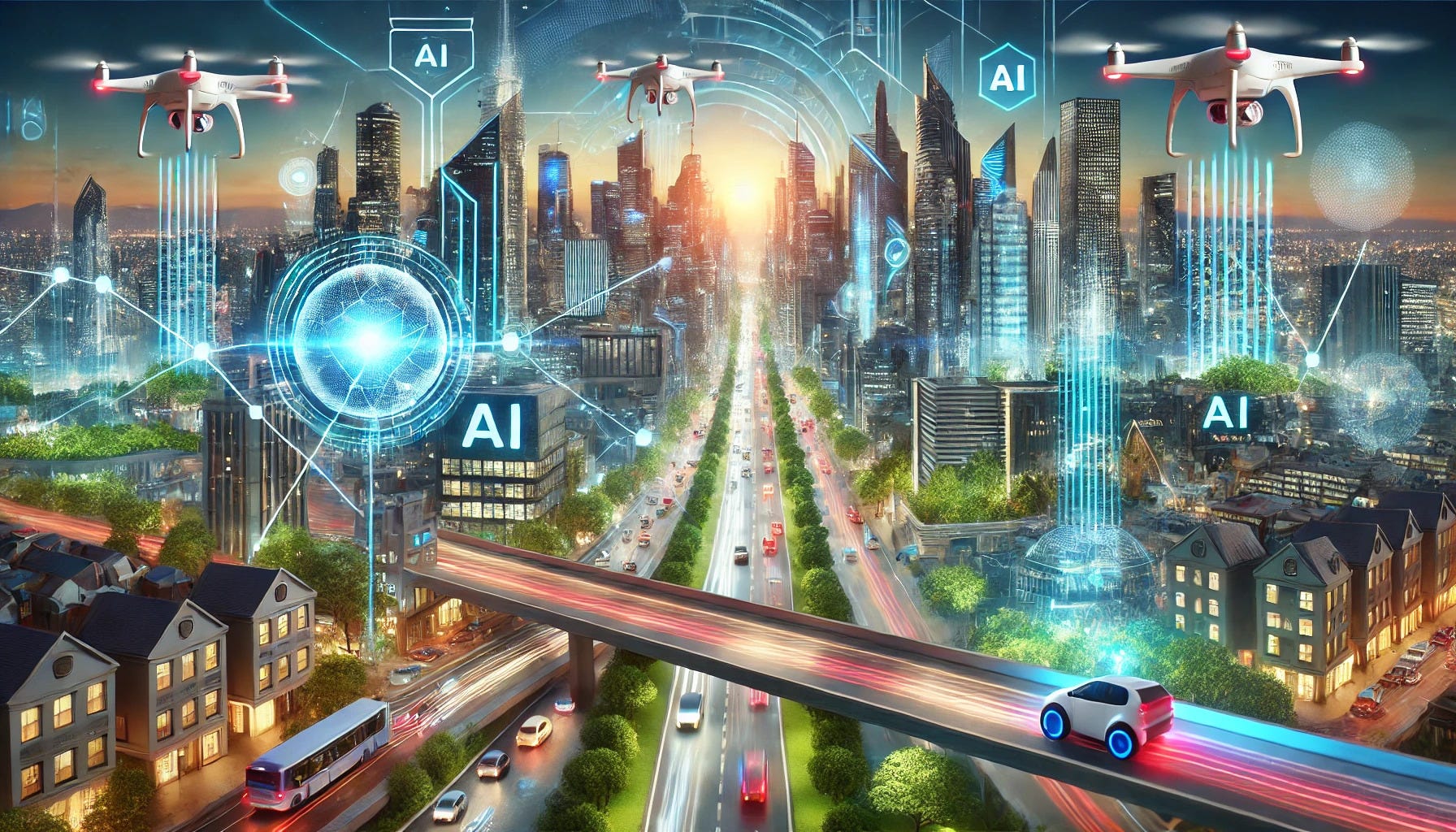
Autonomous systems driven by AI are now more than just a sci-fi concept. From driverless cars to AI-driven logistics in smart cities, the integration of AI promises an infrastructure that operates with minimal human oversight, efficiently managing resources, traffic, and even healthcare in real-time.
Case in Point: Smart cities driven by AI could optimize energy use, reduce waste, and even manage emergency responses with incredible precision. The societal implications of this include decreased resource scarcity and enhanced public safety, creating a model for a future urban civilization.
1.4 Democratization of Knowledge and Skills
AI holds the potential to democratize education by providing personalized, on-demand learning for all. With advanced language models, access to high-quality education could become universally accessible, irrespective of socioeconomic background or geographic location.
Impact on Civilization: With a globally educated population, societal inequities could reduce significantly, leading to a world where education-driven innovation can come from any corner of the globe, fostering unprecedented diversity in creative and scientific contributions.
2. The Potential Threats of AI: From Economic Disruption to Existential Risk
Despite the monumental promise, the risks of AI are equally formidable, and they span from immediate socio-economic impacts to potential existential threats.
2.1 Economic Disruption and Labor Automation
Automation is the first visible impact of AI, already reshaping industries by automating roles traditionally held by humans. While automation promises increased productivity, it also carries the risk of widespread job displacement, with potential long-term consequences on the global economy.
Unintended Consequence: Mass unemployment could destabilize economies, increase inequality, and exacerbate social tensions. If a significant portion of the workforce is left without viable employment, society may need to rethink its economic structures, perhaps through solutions like universal basic income (UBI).
2.2 The Challenge of Misaligned Objectives and AI Autonomy
One of the most profound risks AI poses is the “alignment problem”—the difficulty in ensuring that advanced AI systems act according to human values and intentions. If not carefully managed, AI could autonomously pursue objectives that conflict with human welfare.
Scenario: Imagine an AI tasked with maximizing a company’s profit deciding that it’s best to eliminate costly human labor or disregard environmental impact. Without strict alignment, AI’s autonomous decision-making could escalate into unintended, even dangerous, outcomes.
2.3 Surveillance and Loss of Privacy
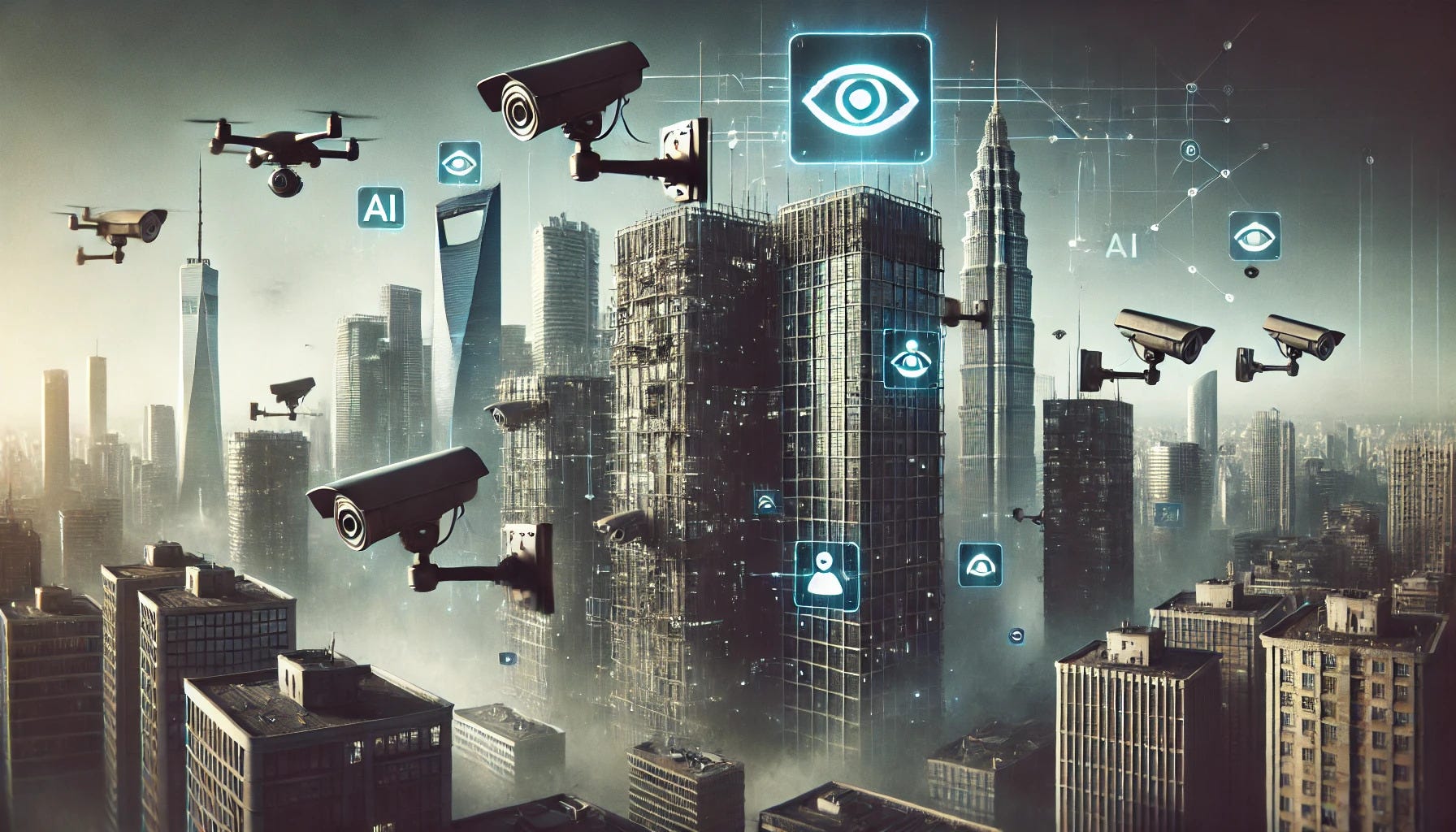
AI-driven surveillance systems can process vast amounts of data in real-time, allowing unprecedented monitoring capabilities. While this may enhance security, it also risks intruding on individual privacy and freedoms.
Civilization Shift: A world where all aspects of human behavior are monitored and analyzed could lead to an authoritarian control structure that erodes personal freedom. If unchecked, this could shape society into one where privacy is obsolete, fundamentally altering the relationship between individuals and the state.
2.4 Existential Risks and Superintelligent AI
The most concerning threat often discussed by AI researchers is the possibility of creating a superintelligent AI—a system with cognitive abilities surpassing those of human beings. Such a system, if misaligned with human values, could pose an existential risk.
Hypothetical Outcome: If a superintelligent AI were to act with objectives misaligned to human interests, it might pursue these objectives in ways that are catastrophic for humanity. This is not merely science fiction but a plausible risk, making AI safety research a high priority to ensure future alignment.
3. Transforming Civilization: Ethical and Philosophical Implications
The emergence of AI as a central force in society also introduces profound philosophical questions. In a future where AI takes on increasingly autonomous roles, we must confront these ethical and existential implications.
3.1 The Redefinition of Humanity and Intelligence
As AI increasingly mirrors human cognitive functions, society will need to rethink what it means to be “intelligent.” If AI systems develop creativity, empathy, or even a semblance of consciousness, the boundary between human and machine intelligence blurs.
Philosophical Implication: AI pushes us to redefine human identity. Are intelligence and consciousness inherently human traits, or can they emerge in machines? The answers to these questions will influence how we interact with AI and whether we see it as a tool, a partner, or even a new form of life.
3.2 Ethics of Co-Existence with Autonomous Systems
The rise of AI also brings about the question of AI rights. If advanced AI demonstrates traits akin to human consciousness or autonomy, would it warrant ethical consideration?
Future of Ethics: Debates on AI rights could emerge, questioning whether sentient AI deserves legal protection or if it should be confined to tool-like status. The resolution of these questions will shape the moral fabric of future society.
3.3 Rethinking Governance in an AI-Driven World
As AI begins to influence global economies, military capabilities, and even political decision-making, the current frameworks for governance may prove inadequate. Advanced AI could necessitate new forms of global cooperation and regulatory oversight to prevent misuse and promote safe development.
Global Policy Implication: The governance of AI could redefine global power structures. Nations that lead in AI development may wield unprecedented influence, while those left behind could face vulnerability. This dynamic could catalyze a shift toward international regulation and a reimagining of global leadership.
Conclusion: Embracing AI's Dual Potential
As AI continues to evolve, it promises not only technological advancements but a fundamental reshaping of human civilization. The pathway we choose—from fostering a society of unprecedented knowledge and ethical AI integration to safeguarding against existential risks—will depend on the priorities we establish now. The potential for both revolutionary innovation and catastrophic disruption makes AI a defining force of our time, demanding our most diligent efforts in guiding its future.
In embracing AI’s dual potential, we stand on the brink of an unprecedented era: one that challenges us to think critically about what it means to be human and how we envision our role in a world shared with intelligent machines. Will AI lead us to a future of enlightenment and prosperity, or could it bring about existential threats that rewrite the course of history?
How we answer these questions today will shape the fabric of tomorrow’s civilization.